Background
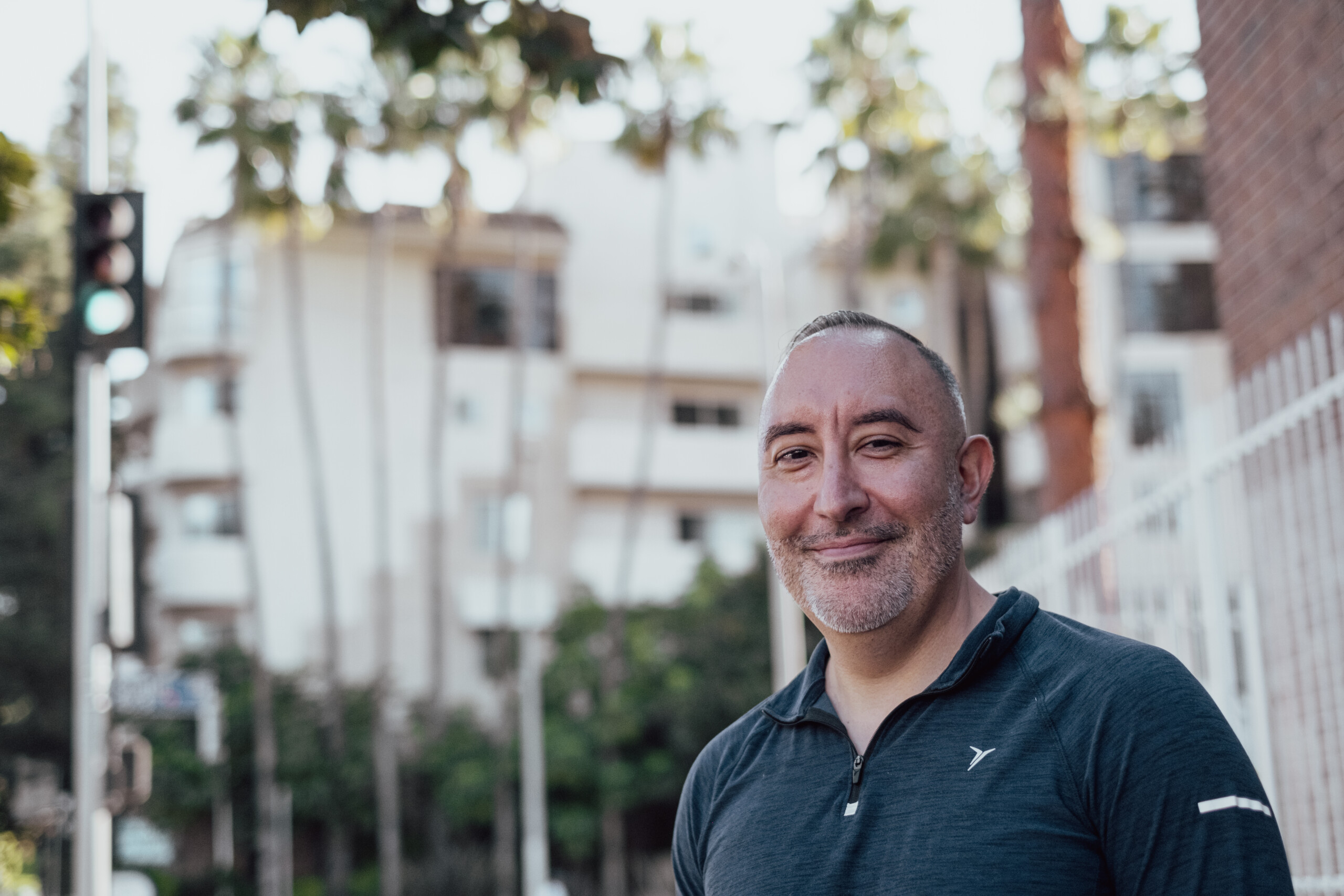
Marc has spent decades designing competitive marching band shows, shaping the experiences of thousands of students. But before he was a teacher, the marching arts saved his life. Caught in a turbulent home between divorcing parents, he struggled with identity and trust. Religion played little role—his mother believed in a higher power, while his father, raised as a Jehovah’s Witness, refused to discuss faith.
At 30, a devastating breakup nearly pushed him to suicide. Then, everything changed. He saw the Dalai Lama laughing on TV, and for the first time in months, he smiled. That moment ignited his journey into Buddhism. A week later, he discovered The Four Noble Truths, and for the first time, reality made sense.
Buddhist philosophy, especially through his teacher, Geshe Jimposono, taught him that perception shapes reality. Everything we label—good, bad, beautiful, or ugly—is a reflection of our own mind. Science, too, confirmed what Buddhism had long known: meditation rewires the brain, breaking cycles of negativity and increasing happiness.
Today, Marc integrates these insights into his teaching and spiritual practice. His core message? Happiness is a choice—rooted in gratitude, positive actions, and compassion. Change your perception, and you change your reality.
Discovery
Marc had always been bold—his mother used to say he had “balls of steel.” If she was curious about something, she’d send him to investigate, and he always would. That fearless drive defined him.
But before he saw His Holiness laughing on TV, Marc realized he had lost that part of himself. Depression had swallowed him whole for six months. His friends stopped coming around. He didn’t laugh, didn’t trust anyone. Instead, he projected his pain onto the world, treating everyone as guilty until proven innocent.
Then one day, he thought, “This isn’t me.” He had always chased what he wanted. He had been in a world champion drum and bugle corps, an environment that nurtured relentless ambition. So when he found Buddhism, he became insatiable. Every morning for three years, rain or shine, he studied at a reservoir park from 5:30 a.m. to noon.
That discipline nearly killed him—he sat so still, for so long, that he developed life-threatening blood clots. But it also transformed him. He learned to be still—physically and mentally. That same drive led him to master Tibetan, memorize sutras, and confront his own flaws.
Through Dharma, he reclaimed himself.
Experiences
Marc has had experiences that challenge skepticism and defy explanation. In 2010, he traveled to Nepal to meet a boy from the Sakya monastery who had reportedly gone six years without food or water. Driven by curiosity and his lifelong pursuit of truth, he became one of the first Americans to have an audience with him, confirming that the phenomenon was real.
Years later, in 2016, Marc faced a different kind of mystery. With a major volunteer event planned at his Dharma center before the Dalai Lama’s visit, continuous rain threatened to derail everything. When he expressed concern to his teacher, Geshe-la, he was told simply, “We’ll do a puja.” Skeptical but willing to participate, Marc helped prepare the ritual. Within a minute of chanting, the clouds began to part. Within an hour, the sky was completely clear, and the weather remained perfect for the entire weekend.
While others dismissed it as coincidence, Marc knew better. His experiences have shown him that some truths can’t be explained—only experienced.
Journey
Marc’s relationship with religion was complicated before Buddhism. Growing up around various faiths, he often questioned the sense of personal exceptionalism many people carried—the idea that out of eight billion people, God spoke directly to them. Buddhism, however, taught him a humbling truth: “You’re ordinary—and that’s okay.”
One night, while driving home deep in thought, he had a realization: “I’m nothing special.” Watching the cars around him, he saw himself as just one of millions. But rather than feeling insignificant, he felt free. Buddhism calls this dak-zin, or self-grasping—the illusion that we are more important than others. In reality, we all want happiness, we all suffer, and we all die.
At first, Marc was captivated by Buddhist rituals and teachings, but over time, one truth stood above all: compassion is everything. He once asked his teacher, Geshe Jimposono, the happiest person he knew, “How much of your happiness comes from studying emptiness?” His teacher replied, “Not much. Most of my happiness comes from thinking more compassionately every day.” That answer changed Marc’s life.
For him, Tibetan wisdom is irreplaceable. He fears it may fade, but he lives by what he’s learned: real practice happens in daily life, in how we treat others—not just on the meditation cushion.
Lineages
Marc sees patterns in spiritual practice that have existed since Buddha’s time, especially the role of debate as a path to truth. The rigorous debate system in Buddhist monasteries wasn’t just intellectual—it was how religions vied for dominance. In ancient times, kings would settle religious disputes through public debates, with the winner’s faith becoming the official religion.
A striking example is Nalanda University, once overtaken by Hinduism after a Hindu master out-debated the resident monks. But then came Aryadeva, a student of Nagarjuna. Sent to reclaim Buddhism’s place, he not only won the debate but also converted the Hindu master. That’s the power of knowledge and logic.
Today, Marc sees a modern version of this tendency—the desire to be an authority in the spiritual world. At his Dharma center, he’s seen people learn just enough to feel confident, then start their own groups. But Buddhism isn’t like Christianity—it relies on an unbroken lineage, passed from teacher to student. Without this, teachings die.
Some people rush into teaching without real depth. He recalls one man who, after two teachings, wanted to start a 12-step Buddhist group. Marc laughed and said, “Buddhism is already a 12-step process—it just takes 12 years instead of 12 weeks.”
Reincarnation
Marc struggled for a long time with the nature of perception until he had a mind-blowing realization through Buddhist perceptual theory—the idea that the mind cannot directly perceive an object. The Buddha emphasized developing clairvoyance (mousheh in Tibetan) as a key skill, not for supernatural reasons, but as a step toward deeper understanding.
Modern research supports this. Russell Targ’s studies on remote viewing confirmed that people could perceive things across space and even across time. One participant even described a location as it appeared 75 years earlier. This aligned with Buddhist teachings—clairvoyance isn’t a mystical gift; it’s a trainable ability.
Marc once asked his teacher, Geshe-la, whether an ordinary person could suddenly see emptiness directly. Geshe-la replied, “No, only exalted minds—Aryas—can.” Marc pressed further: “Do you need clairvoyance to become an Arya?” Geshe-la confirmed, “Yes, absolutely.” This changed Marc’s perspective—developing this ability is part of the path, not just an esoteric concept.
Through Buddhist teachings, Marc came to understand reality as a projection. Consciousness creates the world we experience, planting seeds for future perceptions. This insight reshaped his understanding of rebirth—not as “Mark becoming Mark again,” but as a continuity of consciousness shaped by past impressions.
As Geshe-la often said, “Reincarnation is a misunderstanding. Mark does not get reborn—only his karma does.” This profound realization helped Marc focus on what truly matters: this moment, how we live now, how we grow, and what we leave behind.
Practice
Marc often compares the Dharma to a recipe. If a master baker shares their exact recipe but someone insists on doing it their own way, the cake won’t turn out the same. The Dharma is no different—there’s no need to reinvent the wheel. Just follow the steps.
A true teacher tailors the teachings to each student, knowing when they need intensity or when less is required. But transformation requires surrendering ego, full honesty, and commitment. If you’re only after the “spiritual bling,” you’ll get the rituals but not real happiness.
Marc follows this approach, aligning his practice with the Dalai Lama and his teacher, Geshe Jimpasona. When Geshe-la assigned memorization or deep analysis, Marc followed through, understanding that true growth comes from discipline.
Early misconceptions about meditation led Marc to Instagram-style teachings—“listen to the birds” or “be mindful.” But real meditation, as Tibetan masters teach, requires absolute focus without distraction. Geshe Genyen Lodro’s texts explain that if the mind shifts, even slightly, true concentration (samadhi) is lost. Without stability, clarity, and intensity, there is no meditation—just staring or listening.
Buddhism also emphasizes understanding perception. Translating texts reveals profound insights lost in English. The Four Noble Truths, for example, in Sanskrit, mean truths understood only by those who have directly seen emptiness (aryas). Even “Buddha” in Tibetan translates as “Sangye”—to clear away and cause to bloom.
Marc learned that everything, even personal dislikes, comes from within. If he dislikes someone, it’s his projection—not their reality. Turning the mind inward disarms reactivity and fosters compassion.
Years of failed meditation attempts ended when Geshe-la advised: “Hold your mind on one object for 30 minutes.” It felt impossible—like holding onto a bar of soap. But after years of practice, in 2016, Marc sat under a mango tree in South India and achieved half an hour with no verbal thought.
The next day, a little voice whispered, “Let’s do that again.” The mind wasn’t done resisting. But Marc had tasted true meditation.
Like Buddha, who tested every spiritual path before sitting under the Bodhi tree, seekers today often chase trends. But suffering remains. Buddha left us a map. Find a real teacher, follow it, and do the work. That’s the path to liberation.
Teacher
Marc resonates deeply with Sakya Pandita’s words: “Someone who follows out of faith has dull mental faculties, but someone who follows out of logic and reason has a sharp mind.” Buddhism isn’t about blind worship; guru devotion is about deep respect and a commitment to embodying the teacher’s qualities.
Marc never put his teacher, Geshe Jinpa Sonam, on a pedestal for eternal prostration. Instead, he saw Geshe-la’s wisdom and compassion as a reference point for growth. Geshe-la’s encyclopedic knowledge was unmatched, but what mattered most was the openness in their relationship.
If you can’t be fully honest with your teacher, the relationship won’t work. Marc shared his most embarrassing truths with Geshe-la, and over time, those moments transformed into shared understanding. Later, Geshe-la would even tease him playfully, a sign of deep connection and trust.
Many romanticize finding a master like in old Dharma stories—intense, mystical training. But in reality, true teachers guide with wisdom, patience, and compassion. The Gelugpa tradition outlines ten essential qualities in a teacher, including peacefulness, diligence, mastery of scripture, and unwavering compassion.
Marc warns against spiritual grandiosity—people who show up at Dharma centers thinking they’re special or destined to be the next Dalai Lama. True transformation requires humility and self-examination. A real teacher doesn’t just affirm your beliefs; they challenge you to confront the parts of yourself you’d rather ignore. It’s deeper than therapy—it’s about real, lasting change.